


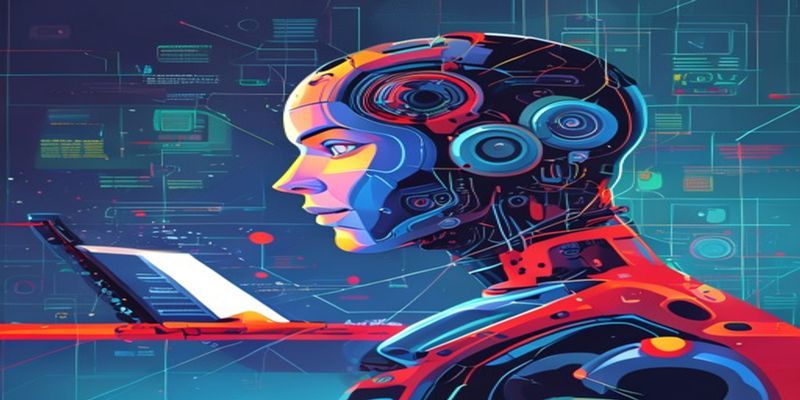
The Automation Paradox: Will AI Create or Eliminate Entry-Level Remote Jobs?
It’s a question echoing in virtual meeting rooms and quiet home offices around the globe: What does the relentless march of AI and automation mean for the future of entry-level remote jobs? For many starting their careers, remote work offers an exciting gateway, but the shadow of automation looms large. Is it a threat that will shrink opportunities, or a catalyst for an entirely new landscape of roles? This isn’t just a theoretical debate; it’s a very real concern for millions entering the workforce.
I remember talking to a recent graduate, full of enthusiasm for a remote data entry position, only to see their excitement tempered by news of AI tools streamlining similar tasks. It’s a classic paradox: automation promises efficiency and growth, but often at the cost of traditional, repetitive roles. Let’s dig into this complex interplay, exploring both the stark realities and the surprising possibilities that AI presents for remote entry-level employment.
The Rising Tide: Remote Work Meets AI Innovation
The pandemic undeniably accelerated the shift to remote work, proving that productivity isn’t tethered to an office desk. This opened doors for countless individuals seeking flexibility and access to a broader job market. Simultaneously, AI has moved from the realm of science fiction into everyday business operations. Tools that can write emails, analyze data, and even generate creative content are now accessible, and their capabilities are expanding exponentially.
This convergence creates what I call ‘The Automation Paradox.’ On one hand, AI can automate mundane tasks, freeing up human workers for more complex, creative, and strategic endeavors. On the other, many entry-level remote jobs historically consist of these very ‘mundane tasks’ – data input, basic customer support, scheduling, and repetitive administrative work.
The Elimination Argument: Where AI Poses a Threat
Let’s be candid: some remote entry-level jobs are undoubtedly at risk. Any role that is highly repetitive, rules-based, and involves processing large volumes of data is ripe for automation. Think about:
- Data Entry Specialists: Advanced Optical Character Recognition (OCR) and Robotic Process Automation (RPA) tools can now extract, categorize, and input data with incredible speed and accuracy.
- Basic Customer Service Representatives: AI-powered chatbots and virtual assistants like those from OpenAI or Google Gemini can handle common queries, troubleshoot simple issues, and direct complex problems to human agents, reducing the need for entry-level human intervention.
- Administrative Assistants (Repetitive Tasks): Scheduling, managing emails, and organizing documents can increasingly be handled by AI assistants integrated into platforms like Microsoft 365 or Google Workspace.
- Content Moderation (Basic): AI can flag inappropriate content much faster than human teams, although complex moderation still requires human nuance.
The immediate impact often falls on roles that were previously gateways for individuals without specialized skills to enter the remote workforce. This is a legitimate concern for job seekers and a challenge for policymakers.
The Creation Argument: New Roles, Augmented Capabilities
However, focusing solely on elimination misses a crucial part of the picture. AI doesn’t just replace; it transforms and creates. For every job lost to automation, new roles emerge, and existing jobs become augmented, demanding new skills and offering new opportunities. This is where the true potential for entry-level remote workers lies.
Emerging Roles & Skills:
- AI Prompt Engineers: With generative AI tools like ChatGPT and Midjourney, knowing how to craft effective prompts to get desired outputs is a valuable skill. Entry-level roles in prompt engineering or AI content generation are starting to appear.
- AI Data Labelers/Annotators: AI models need vast amounts of labeled data to learn. This often involves human workers categorizing images, text, or audio, which can be done remotely. Platforms like Upwork and Fiverr often list these micro-tasks.
- Automation Specialists/Integrators: Someone needs to set up, monitor, and troubleshoot the automation tools. Platforms like Zapier and Make.com allow users to connect different apps and automate workflows. Entry-level roles focusing on ‘low-code’ or ‘no-code’ automation are booming.
- AI-Assisted Content Creators: While AI can draft content, a human is still needed for editing, fact-checking, adding nuance, and ensuring brand voice. Tools like Jasper AI or Surfer SEO become powerful assistants, not replacements.
- Digital Adoption Trainers: As more companies adopt AI tools, there’s a growing need for individuals to train employees on how to use them effectively.
- AI Ethics and Fairness Reviewers: Ensuring AI systems are unbiased and fair requires human oversight, and entry-level positions can involve reviewing datasets and outputs for potential issues.
These new roles often demand a blend of technical literacy and uniquely human skills like critical thinking, creativity, emotional intelligence, and complex problem-solving.
Category: AI & AUTOMATION
Tags: automation, AI, remote jobs, entry-level jobs, future of work, job market, upskilling, tech careers