


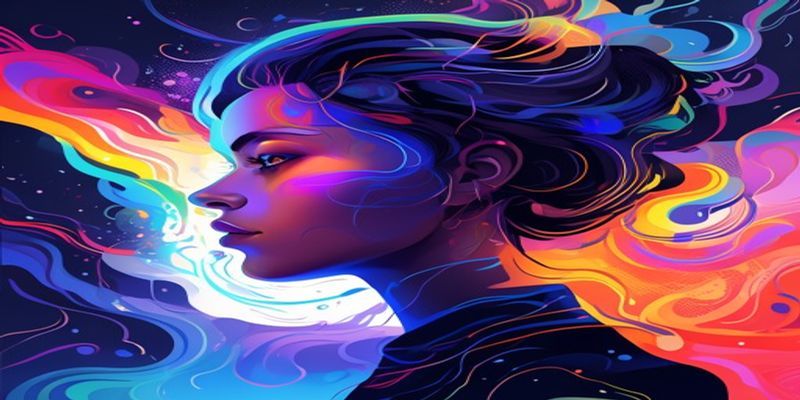
DALL-E vs. Midjourney vs. Stable Diffusion: Finding the Best AI Art Generator for Designers
I remember the first time I saw an AI-generated image. It was a surreal, almost dreamlike landscape, conjured from a simple text prompt. My immediate thought wasn’t just ‘wow,’ but ‘how can I use this in my design work?’ Like many of you, I’ve spent countless hours experimenting, trying to bend these incredible tools to my creative will. The sheer explosion of AI image generators has been both exhilarating and a little overwhelming. Suddenly, everyone has a powerful digital artist at their fingertips, but choosing the right one for professional design work can feel like navigating a maze.
Today, the titans of this burgeoning field are DALL-E, Midjourney, and Stable Diffusion. Each has its loyalists, its unique strengths, and its particular quirks. For designers like us – whether you’re crafting mockups, developing concepts, or seeking inspiration – selecting the best AI art generator for designers isn’t just about cool images; it’s about efficiency, control, and ultimately, delivering client-ready results. Let’s break down these three giants and see which one truly fits your creative arsenal.
Understanding the Landscape: A Quick Overview
Before we dive into the specifics, it’s helpful to understand the fundamental differences. All three tools transform text descriptions (prompts) into visual art. However, their underlying philosophies, accessibility, and output styles vary significantly. You’ve got the refined, user-friendly experiences of DALL-E and Midjourney, contrasted with the open-source, highly customizable power of Stable Diffusion.
DALL-E: The Pioneer with Polish
Developed by OpenAI, DALL-E was one of the first AI image generators to truly capture mainstream attention. Its initial reveal felt like science fiction becoming reality, and it continues to be a formidable contender.
Key Features & Strengths
- Ease of Use: DALL-E boasts perhaps the most intuitive interface. You type your prompt, click generate, and within seconds, you have a set of images. It’s incredibly straightforward, making it perfect for quick ideation.
- Precise Object Generation: When you need a specific object in a specific style (e.g., ‘a retro toaster sitting on a futuristic kitchen counter’), DALL-E often excels at understanding and rendering these literal requests with surprising accuracy.
- Inpainting & Outpainting: These powerful features allow you to modify specific areas of an image or expand beyond its original borders, creatively filling in the blanks. This is fantastic for iterating on existing designs or subtly altering compositions.
- Professional Mockups: For graphic designers needing quick mockups or variations of product placements, DALL-E can be incredibly efficient. I’ve personally used it to generate numerous background options for packaging mockups, saving hours compared to traditional stock photo searches.
Limitations & Use Cases
- Less Stylistic Control (Out-of-the-Box): While DALL-E can produce stunning images, it can sometimes feel less ‘artistic’ or ‘moody’ than Midjourney without very specific prompting. Its default aesthetic tends to be more realistic or illustrative rather than overtly painterly or cinematic.
- Credit System: DALL-E operates on a credit system, meaning each generation consumes credits, which you either buy or receive monthly with a subscription.
When I need a quick concept for a client presentation, a unique icon, or a straightforward visual element that demands clarity over extreme artistic flourish, DALL-E is my go-to. It’s reliable, predictable, and remarkably good at understanding literal instructions. You can explore DALL-E directly on the OpenAI website.
Midjourney: The Artistic Visionary
Midjourney burst onto the scene with an entirely different vibe. Operating primarily through a Discord server, it quickly gained a reputation for generating incredibly high-quality, aesthetically pleasing, and often surreal or cinematic images.
Key Features & Strengths
- Unparalleled Aesthetic Quality: Midjourney’s strength lies in its ability to produce images with an almost inherent artistic flair. Its default output often looks like something a professional concept artist would create, with stunning lighting, composition, and mood.
- Cinematic & Painterly Styles: If you’re looking for breathtaking landscapes, character concepts with dramatic lighting, or abstract art that evokes strong emotions, Midjourney consistently delivers. It’s like having a digital art director who understands exactly what ‘epic’ looks like.
- Strong Community: The Discord-based interface fosters a vibrant, active community where users share prompts, tips, and inspiration. This can be an invaluable learning resource.
- Powerful Parameters: Midjourney offers a rich set of parameters that allow for granular control over aspect ratios, style weights, chaos levels, and more, enabling sophisticated prompt engineering.
Limitations & Use Cases
- Discord Interface: For some, the Discord-first approach can be a barrier to entry, feeling less intuitive than a dedicated web application. It requires learning specific commands and navigating shared channels.
- Less Control Over Specific Objects: While Midjourney excels at overall aesthetic, getting it to consistently render very specific objects in precise positions can sometimes be more challenging than with DALL-E, especially in earlier versions. However, recent updates have significantly improved this.
- Subscription Model: Midjourney operates on a subscription model, offering different tiers based on generation speed and usage limits.
For breathtaking, mood-driven art that truly evokes emotion, or when I need visually stunning concepts for a brand identity, book cover, or game art, Midjourney has consistently blown me away. It’s the tool I turn to when the aesthetic ‘feel’ is paramount. You can start your Midjourney adventure on their official website.
Stable Diffusion: The Open-Source Powerhouse
Stable Diffusion, developed by Stability AI and an open-source community, represents a different philosophy entirely. It’s less of a service and more of a technology that you can run yourself, offering unparalleled freedom and customization.
Key Features & Strengths
- Open-Source & Free (Software): The core Stable Diffusion model is free to download and run on your own hardware. This means no per-image costs or monthly subscriptions (beyond your electricity bill and hardware investment).
- Immense Customization: This is where Stable Diffusion truly shines. Users can download and train custom models (fine-tuned for specific styles or subjects), use extensions like ControlNet for incredibly precise pose and composition control, or leverage tools for inpainting, outpainting, upscaling, and more. The possibilities are virtually endless.
- Privacy & Local Control: Running Stable Diffusion locally means your images and data never leave your computer, which can be a significant advantage for sensitive projects or privacy-conscious designers.
- Vast Ecosystem: Websites like Civitai host thousands of community-trained models and LoRAs (Low-Rank Adaptation), allowing you to achieve almost any artistic style imaginable, from hyperrealistic photography to specific anime styles.
Limitations & Use Cases
- Requires Technical Know-How: Setting up Stable Diffusion can be daunting for beginners. It often involves command-line interfaces, installing Python, and configuring various parameters. While user-friendly interfaces like Automatic1111’s WebUI exist, they still require a steeper learning curve than DALL-E or Midjourney.
- Hardware Requirements: To run effectively, Stable Diffusion needs a relatively powerful graphics card (GPU) with sufficient VRAM (at least 8GB, preferably 12GB+). Without it, generations can be agonizingly slow or impossible.
Stable Diffusion felt like unlocking a whole new level of creative freedom. Yes, the initial setup was a weekend project, involving troubleshooting and learning new terminology, but the sheer power and ability to truly ‘own’ my workflow – to train models on my own style or generate specific assets for a niche project without cost per image – was liberating. For the dedicated designer, especially those interested in game development, intricate character design, or highly specific artistic directions, Stable Diffusion is the ultimate toolkit. You can learn more and get started on the Stability AI website.
Head-to-Head: Which is Best for *You*?
The question of the best AI art generator for designers isn’t a simple one. It hinges on your specific needs, technical comfort, and budget.
Ease of Use & Accessibility
- DALL-E: Wins hands down for simplicity. Browser-based, minimal learning curve.
- Midjourney: Relatively easy once you get past the Discord interface.
- Stable Diffusion: Steepest learning curve, especially for local installation. Cloud-based versions exist (e.g., RunDiffusion, Clipdrop), but sacrifice some control.
Artistic Style & Aesthetic
- Midjourney: Dominates for high-artistic, cinematic, and mood-driven visuals. Its default output is often stunning.
- DALL-E: Excellent for clear, conceptual, and more ‘literal’ interpretations, great for mockups and direct visual communication.
- Stable Diffusion: Can achieve *any* style, but requires the user to find and apply the right models and prompts. The potential is limitless, but it demands more effort.
Control & Customization
- Stable Diffusion: The undisputed champion. With ControlNet, LoRAs, custom models, inpainting, and precise parameter tuning, you have ultimate command over every pixel.
- Midjourney: Offers significant control through a robust parameter system, allowing for detailed stylistic adjustments.
- DALL-E: Offers basic control through prompting and inpainting/outpainting, but less granular stylistic input compared to the others.
Pricing & Cost-Effectiveness
- Stable Diffusion: Free to use if you have the hardware. Cloud services can range from hourly rates to monthly subscriptions. The initial GPU investment can be significant.
- DALL-E: Credit-based system, often tied to a subscription. Good for moderate use.
- Midjourney: Subscription tiers, generally providing more generations per dollar than DALL-E for heavy users.
My Recommendation for Designers
Based on extensive personal use and observing how these tools are evolving, here’s my practical advice for finding the best AI art generator for designers, tailored to different design roles:
- For the Graphic Designer Needing Quick Concepts & Mockups: DALL-E
If your workflow demands speed, clarity, and precision for professional presentations, quick ideation, or specific object generation, DALL-E’s straightforward interface and reliable output make it an invaluable tool. - For the Concept Artist, Illustrator, or Brand Strategist Seeking High-Artistic Vision: Midjourney
When the mood, aesthetic, and artistic quality are paramount, Midjourney is simply outstanding. For mood boards, character concepts, environmental art, or generating stunning brand visuals, its default output often surpasses the others in sheer beauty. - For the Advanced User, Game Developer, or Budget-Conscious Professional Demanding Ultimate Control: Stable Diffusion
If you’re willing to invest the time to learn and have the necessary hardware (or use a cloud service), Stable Diffusion offers an unparalleled level of control, customization, and cost-effectiveness in the long run. It’s the ultimate tinker’s paradise for creating highly specific assets, custom styles, and detailed iterations.
Ultimately, many designers will find value in a hybrid approach. I often use DALL-E for initial concepts, Midjourney for artistic inspiration, and then refine or completely regenerate elements in Stable Diffusion for maximum control. Don’t be afraid to experiment with trials or free tiers to see which ‘clicks’ with your personal workflow.
The Future of AI Art
The landscape of AI art is evolving at a breakneck pace. We’re seeing advancements in multimodal AI, greater control over video generation, and more sophisticated editing capabilities. Ethical considerations around ownership, bias, and deepfakes will continue to be critical discussions. As these tools become even more integrated into our creative processes, understanding their nuances will only become more important for designers aiming to stay ahead.
Frequently Asked Questions About AI Image Generators
Is Stable Diffusion truly free?
The core Stable Diffusion model is indeed open-source and free to download and run. However, you need a computer with a powerful graphics card (GPU) to run it locally effectively. If you don’t have the hardware, you might opt for cloud-based Stable Diffusion services, which typically have a cost.
Can I use AI-generated art commercially?
This is a complex and evolving area. Generally, images generated by DALL-E and Midjourney can be used commercially, provided you have an active subscription for the latter. Stable Diffusion’s open-source nature offers more freedom, but copyright interpretations vary by jurisdiction and are still being debated. Always check the terms of service for each platform and consult legal advice for critical projects.
Which tool is best for photorealistic images?
All three can generate photorealistic images. DALL-E is often good for straightforward realism. Midjourney excels at cinematic, high-quality photorealism with strong mood. Stable Diffusion, with the right models (e.g., specific realistic checkpoints from Civitai), can achieve hyperrealistic results that are virtually indistinguishable from photographs, offering the most control over fine details.
What’s the biggest learning curve among them?
Stable Diffusion generally has the steepest learning curve due to its technical requirements, vast customization options, and often a command-line or complex UI interface. Midjourney, with its Discord commands, is next. DALL-E is arguably the easiest to pick up and start generating images with immediately.
Category: AI TOOLS
Tags: AI art, AI image generator, DALL-E, Midjourney, Stable Diffusion, digital art, graphic design, creative tools, AI for designers