The Future of Electric Vehicles: Beyond Batteries & Towards Sustainable Mobility
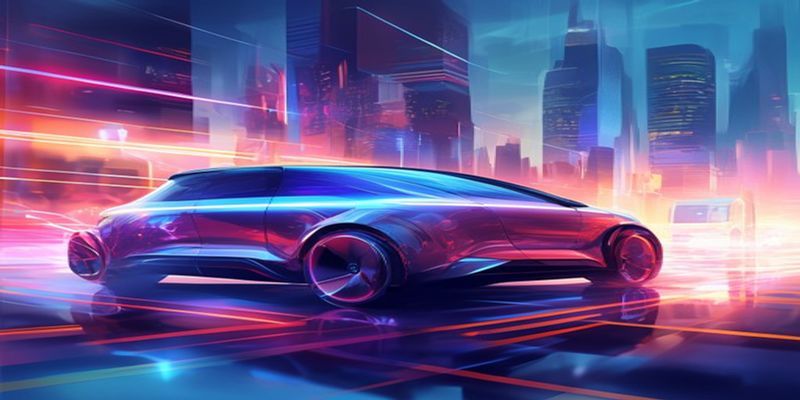
The Future of Electric Vehicles: Beyond Batteries & Towards Sustainable Mobility
Remember that fleeting moment when you first saw a fully electric car glide by, almost silently, and thought, “Is this really the future?” For many of us, that moment has evolved into a daily reality, yet the journey of the electric vehicle (EV) is far from over. What we’re witnessing today is just the beginning. The horizon of automotive innovation isn’t merely about putting more batteries into cars; it’s about a holistic transformation of how we move, fueled by groundbreaking upcoming electric vehicle innovations that promise to redefine sustainable mobility.
For years, range anxiety and charging times have been the whispered concerns, the subtle hesitations that kept some on the sidelines. But imagine a world where your EV charges faster than you can grab a coffee, where it drives itself while you catch up on emails, and where its environmental footprint extends far beyond zero tailpipe emissions. This isn’t science fiction; it’s the immediate future that engineers, scientists, and visionaries are building right now.
The Core Challenge: Redefining Battery Technology
At the heart of every EV lies its battery. While lithium-ion batteries have served us well, they represent a stepping stone, not the final destination. The push for greater energy density, faster charging, and enhanced safety is driving a revolution in power storage.
Solid-State Batteries: The Holy Grail?
If you’ve ever felt that slight pang of anxiety watching your EV’s range deplete on a long trip, you’re not alone. Solid-state batteries promise to banish that feeling. Unlike their liquid-electrolyte predecessors, solid-state batteries use a solid material for their electrolyte. This seemingly simple change unlocks a cascade of benefits: significantly higher energy density (meaning more range from a smaller, lighter pack), much faster charging times, and dramatically improved safety by eliminating the flammable liquid electrolyte.
Companies like QuantumScape, backed by Volkswagen, are making significant strides, reporting promising results in their prototypes. Toyota has also been a vocal proponent, investing heavily with plans to introduce vehicles with solid-state batteries in the coming years. When these hit mainstream production, they will fundamentally alter the EV ownership experience, making long-distance travel as convenient as, or even more convenient than, with gasoline cars.
Beyond Lithium-Ion: Alternative Chemistries
While solid-state is garnering significant attention, researchers aren’t putting all their eggs in one basket. Exploration into alternative battery chemistries continues, driven by the desire for more abundant, cheaper, and sustainable materials. Sodium-ion batteries, for instance, are gaining traction. Sodium is far more plentiful than lithium, making it a potentially cost-effective and environmentally friendly alternative. Although currently less energy-dense than lithium-ion, advancements are rapid, and we could see sodium-ion powering urban commuters or grid storage solutions very soon. Other chemistries like magnesium-ion and even zinc-air batteries are also being explored, each with unique advantages that could cater to different segments of the mobility market.
Charging Up: A Seamless Experience
Beyond the battery itself, the act of recharging is undergoing a profound transformation. The days of struggling with tangled cables or waiting endlessly at a slow charger are numbered.
Ultra-Fast Charging and Megawatt Chargers
The pace of charging is accelerating dramatically. Today’s 350 kW DC fast chargers can add hundreds of miles of range in under 20 minutes for many vehicles. Standards like CCS (Combined Charging System) are becoming more widespread, while Tesla’s NACS (North American Charging Standard) is being adopted by a growing number of automakers, promising a more unified and accessible network. But for larger vehicles, especially electric trucks and buses, even faster solutions are needed. Enter megawatt charging. Systems capable of delivering 1-3 MW of power are under development, promising to charge heavy-duty vehicles in times comparable to refueling a diesel truck. This will be a game-changer for commercial logistics, eliminating a major barrier to fleet electrification.
Wireless Charging: Convenience on the Go
Imagine pulling into your garage or parking spot, and your car simply starts charging without plugging in. Wireless charging, using inductive technology, is already a reality in some pilot programs. Companies like Electreon are even developing dynamic wireless charging roads, where EVs can charge while driving, effectively extending their range indefinitely on equipped highways. While still in early stages for widespread adoption, static wireless charging for home use could soon become a premium convenience, making EV ownership even more effortless.
Battery Swapping: A Quick Pit Stop
For those who prioritize speed above all else, battery swapping offers an intriguing solution. Instead of charging a depleted battery, the car pulls into a station, and a robot quickly replaces its empty battery pack with a fully charged one. Chinese EV manufacturer Nio has championed this model, establishing hundreds of battery swap stations across China and expanding into Europe. A swap takes mere minutes, comparable to a gas station stop, completely eliminating charging time from the equation for drivers who value instant gratification.
The Road Ahead: Autonomous and Connected EVs
The future of EVs isn’t just about how they’re powered; it’s about how they drive and interact with the world around them. Autonomous driving capabilities are maturing rapidly, promising to make our commutes safer, more efficient, and perhaps even enjoyable.
Levels of Autonomy and Real-World Impact
From advanced driver-assistance systems (ADAS) to fully self-driving cars, the progression of autonomy is a fascinating journey. We’re already familiar with Level 2+ systems like Tesla’s Full Self-Driving (FSD) Beta or GM’s Super Cruise, where the car can handle most driving tasks under human supervision. The leap to Level 3, where the car can truly drive itself under specific conditions and the driver can disengage, is happening now. Companies like Waymo and Cruise are operating Level 4 autonomous taxi services in limited areas, demonstrating the safety and efficiency of vehicles that can drive themselves without human intervention in defined operational domains. Imagine a future where you commute to work reading a book, or your car drops off your kids at school before parking itself. These upcoming electric vehicle innovations intertwine seamlessly with autonomy, creating a genuinely transformative experience.
Vehicle-to-Everything (V2X) Communication
The next generation of EVs won’t just drive autonomously; they’ll communicate. V2X technology allows vehicles to talk to other vehicles (V2V), infrastructure (V2I) like traffic lights, pedestrians (V2P), and even the grid (V2G). This constant exchange of data will unlock unprecedented levels of safety by anticipating hazards, optimize traffic flow to reduce congestion, and enable vehicles to act as mobile power banks, feeding energy back into the grid during peak demand or in emergencies. This interconnected ecosystem is fundamental to intelligent, sustainable cities of the future.
Sustainable Mobility: More Than Just the Car
While EVs eliminate tailpipe emissions, true sustainable mobility requires a broader perspective. It’s about the entire lifecycle of the vehicle, from raw materials to end-of-life, and how the energy it consumes is generated.
Circular Economy and Recycling
The materials used in EV batteries and components are valuable. The industry is rapidly developing robust recycling processes to recover critical minerals like lithium, cobalt, and nickel, reducing reliance on new mining and minimizing environmental impact. Beyond recycling, strategies for the “second life” of EV batteries are gaining traction. Once a battery’s capacity drops below optimal levels for automotive use, it can still serve a useful purpose in stationary energy storage for homes or grid stabilization, extending its lifespan and maximizing its value before eventual recycling. Companies like Redwood Materials are leading the charge in creating a circular economy for EV batteries.
Renewable Energy Integration
An electric vehicle is only as clean as the electricity that powers it. The ongoing global transition to renewable energy sources like solar and wind power is crucial for realizing the full environmental benefits of EVs. Imagine charging your EV at home using solar panels on your roof, or at public charging stations powered by local wind farms. This synergy between clean energy generation and consumption is the ultimate goal, creating a truly zero-emission transportation system. Governments and energy companies are increasingly focusing on building robust smart grids that can handle the increased demand from EVs while prioritizing renewable sources.
The Road Ahead is Electric
The upcoming electric vehicle innovations paint a vivid picture of a future that’s not only electric but also intelligent, efficient, and fundamentally sustainable. From game-changing battery technologies that alleviate range anxiety to autonomous systems that transform travel into productive or relaxing time, and an entire ecosystem built on renewable energy and circularity – the evolution of the EV is a testament to human ingenuity. As we move forward, these advancements will not just change the cars we drive, but the very fabric of our cities and our relationship with the planet. The future, it seems, is bright, silent, and incredibly fast.
FAQ: Understanding Upcoming EV Innovations
What are solid-state batteries and why are they important for EVs?
Solid-state batteries use a solid electrolyte instead of a liquid one, offering significant advantages over traditional lithium-ion batteries. They promise higher energy density (meaning more range from a smaller battery), faster charging times, and enhanced safety by eliminating flammable liquids. This technology is seen as crucial for the next generation of electric vehicles, potentially making them lighter, more efficient, and safer.
How will EV charging infrastructure evolve in the near future?
Future EV charging will focus on speed, convenience, and accessibility. We can expect widespread deployment of ultra-fast DC chargers (350kW+), expanded networks like Tesla’s NACS, and the emergence of megawatt charging for commercial vehicles. Additionally, wireless charging (both static and dynamic on roads) and battery swapping stations, as demonstrated by Nio, will offer more seamless and quicker alternatives to traditional plug-in charging.
What role does autonomous driving play in the future of electric vehicles?
Autonomous driving is deeply integrated with the future of EVs. As EVs become smarter and more connected, they will evolve from driver-assisted to fully self-driving (Level 4 and 5) capabilities, transforming commutes and logistics. This integration will enhance safety, optimize traffic flow, and free up human drivers for other tasks. V2X communication will allow these autonomous EVs to interact with each other and city infrastructure for greater efficiency.
Are upcoming EV innovations truly sustainable, considering battery production and end-of-life?
Yes, sustainability is a key driver for upcoming EV innovations. Beyond zero tailpipe emissions, there’s a strong focus on the entire lifecycle. Innovations include developing battery chemistries with more abundant materials (like sodium-ion), robust recycling programs to recover critical minerals, and second-life applications for used batteries in energy storage. Furthermore, the push for EVs is intrinsically linked to charging them with renewable energy sources like solar and wind to achieve true overall environmental benefit.
What specific brands or technologies should I look out for regarding upcoming EV innovations?
Keep an eye on companies like QuantumScape and Toyota for advancements in solid-state battery technology. For charging, Tesla (NACS) and companies developing megawatt charging solutions are key. In autonomous driving, Waymo, Cruise, and Tesla (FSD) are at the forefront. For battery swapping, Nio is a leader, and Electreon is innovating in wireless charging. Redwood Materials is a prominent name in battery recycling and the circular economy for EVs.
Category: FUTURE TECH
Tags: Electric Vehicles, EV Innovation, Solid-State Batteries, Autonomous Driving, Sustainable Mobility, Charging Infrastructure, Future Technology, Clean Energy