Beyond the Hype: Practical Uses and the Future of Apple Vision Pro
Beyond the Hype: Practical Uses and the Future of Apple Vision Pro
When Apple unveiled the Vision Pro, the tech world erupted. Initial reactions spanned awe at its technological prowess to skepticism about its hefty price tag and perceived niche appeal. Yet, as the dust settles and early adopters delve deeper, the conversation is shifting from speculative “wow” factor to tangible utility. The critical question emerging is: what are the practical uses for Apple Vision Pro, and how will it genuinely integrate into our professional and personal lives beyond the initial novelty?
This isn’t just another gadget; it’s Apple’s ambitious foray into spatial computing, promising an entirely new way to interact with digital content. To truly understand its impact, we must look past the sleek design and impressive specifications to the real-world scenarios where it offers a distinct, superior advantage. From transforming workstations to revolutionizing entertainment and even aiding everyday tasks, the Vision Pro holds a potential that transcends mere entertainment or niche professional tools.
Redefining Productivity: A Spatial Workspace
One of the most compelling arguments for the Vision Pro lies in its capacity to redefine the concept of a personal workspace. Imagine an infinite canvas where your digital tools are no longer confined to the physical boundaries of a monitor, but float seamlessly in your environment.
Multitasking Reinvented with Infinite Displays
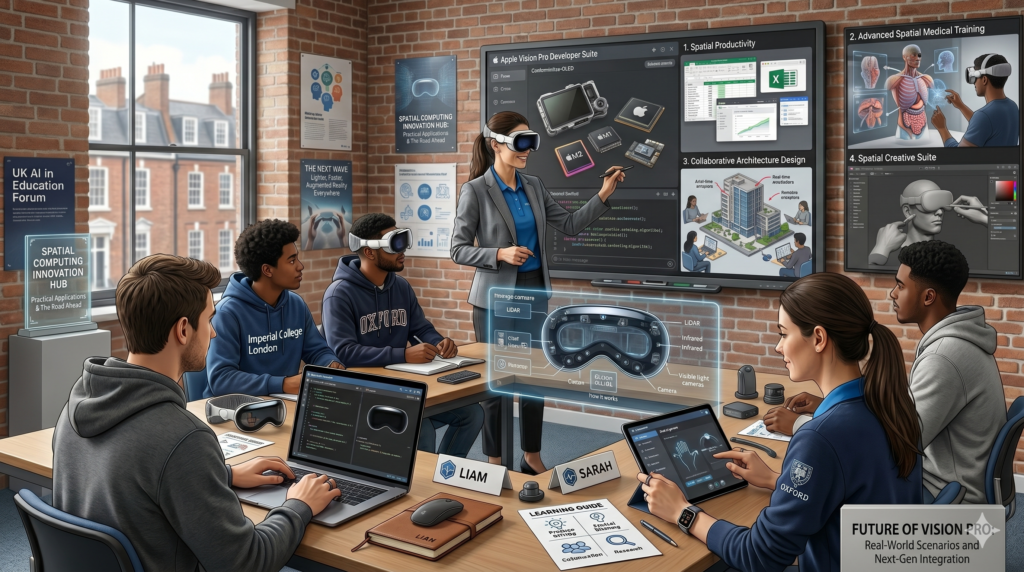
For professionals, the most immediate and impactful practical use is the ability to create an expansive, multi-monitor setup anywhere. With Vision Pro, you can project multiple macOS windows of varying sizes around you, extending your desktop far beyond what physical monitors allow. This isn’t just about more screen space; it’s about a dynamic, customizable environment that adapts to your workflow. Developers can have code editors, documentation, and a virtual terminal all open simultaneously in their field of view. Financial analysts can monitor multiple charts and data feeds without ever minimizing a window. This liberates users from desk constraints, making a coffee shop, an airplane, or even a living room a fully functional, high-efficiency office.
Enhanced Collaboration and Remote Work
Remote and hybrid work models have accelerated the need for more immersive collaborative tools. While still in its early stages, the Vision Pro’s Spatial Persona feature offers a glimpse into a future where video calls become significantly more engaging. Instead of flat video feeds, users appear as realistic 3D representations, maintaining eye contact and spatial awareness during virtual meetings. This adds a layer of presence that traditional video conferencing struggles to achieve, potentially reducing the sense of isolation often associated with remote work. Imagine conducting design reviews where participants can virtually “walk around” a 3D model together, or engineers collaborating on complex schematics as if in the same room.
Specialized Professional Applications
Beyond general productivity, specific industries stand to gain significantly. Architects and designers can visualize and iterate on 3D models at true-to-life scale within their physical space, identifying flaws or improvements more intuitively. Medical professionals could use it for surgical planning or detailed anatomical studies, overlaying digital information directly onto real-world objects or models. In manufacturing, engineers could perform virtual inspections or guide assembly processes with augmented reality overlays. The ability to bring complex digital data into the physical environment opens doors for precision, training, and innovation across countless fields.
Immersive Entertainment and Communication
While productivity often takes center stage, the Vision Pro’s entertainment capabilities are far from trivial, offering experiences that transcend traditional media consumption.
The Ultimate Personal Cinema
Forget the limitations of TV sizes. Vision Pro transforms any space into a personal movie theater with an expansive, high-resolution screen that can be as large as you desire, complete with spatial audio. This isn’t merely watching a movie; it’s being enveloped by it. For frequent travelers, apartment dwellers, or anyone seeking an uninterrupted, premium viewing experience, this is a significant upgrade. Imagine watching a blockbuster film with cinematic scale and immersion on your couch or during a long flight, all without disturbing anyone around you. Content can range from 2D movies and TV shows to specially designed 3D cinematic experiences that truly leverage the device’s depth capabilities.
A New Frontier for Gaming
While not explicitly marketed as a gaming console, Vision Pro opens fascinating avenues for mixed-reality gaming. Developers are beginning to explore experiences that blend digital elements seamlessly into your physical surroundings. Picture a virtual enemy bursting through your living room wall, or a strategy game unfolding on your coffee table. This blend of virtual and physical space offers a more visceral and interactive gaming experience than purely virtual reality, pushing the boundaries of immersion and interaction. Casual games that integrate with your environment could become a new genre, making every room a potential playground.
Connecting Differently with Spatial Persona
Beyond professional meetings, the advancements in communication extend to personal connections. FaceTime with Spatial Persona allows for incredibly lifelike video calls where participants feel present in your space. This humanizes digital interaction in a way standard video calls cannot, fostering a stronger sense of connection with friends and family, especially those at a distance. It’s an attempt to bridge the gap between physical presence and virtual interaction, moving beyond flat screens to a more authentic form of digital communication.
Everyday Interactions: Beyond the Obvious
The true measure of a transformative technology often lies in its subtle integration into daily life, solving problems we didn’t even realize we had.
Revolutionizing Education and Training
The potential of Vision Pro in education is immense. Students could explore historical sites virtually, interact with 3D models of complex scientific structures, or conduct virtual experiments without laboratory limitations. For vocational training, it could simulate dangerous or expensive scenarios, allowing trainees to practice intricate procedures in a safe, controlled mixed-reality environment. Imagine medical students dissecting virtual cadavers or engineering students assembling complex machinery piece by piece in their living room, guided by augmented instructions.
Accessibility and Assisted Living
While still speculative, the Vision Pro could offer significant benefits for accessibility. Features like sophisticated eye-tracking and voice control could empower users with motor impairments to navigate digital interfaces with unprecedented ease. Overlaying information onto the real world could assist individuals with cognitive challenges in daily tasks, providing visual cues or step-by-step instructions. For those with hearing impairments, real-time captions or sign language interpreters could be projected directly into their field of view during conversations, blending digital assistance seamlessly into reality.
Augmented Reality for Practical Tasks
Imagine home improvement projects where instructions are overlaid directly onto the wall you’re painting or the furniture you’re assembling. Need to identify a plant? Point your Vision Pro at it, and an overlay appears with its name and care instructions. While many of these are nascent applications, the underlying technology paves the way for a future where digital assistance is contextually aware and seamlessly integrated into our physical environment, making everyday tasks simpler and more intuitive. Think of it as a super-powered digital assistant that lives in your line of sight.
The Road Ahead: Challenges and Opportunities
Despite its remarkable potential, the widespread adoption of Apple Vision Pro faces several hurdles that need addressing for its vision of spatial computing to become a pervasive reality.
Cost and Accessibility
The most immediate barrier is its premium price point. At $3,499, it remains a luxury item, largely inaccessible to the average consumer. As with all new technologies, costs are expected to decrease over time, but this will be a critical factor in how quickly it moves from an enthusiast’s gadget to a mainstream device. Accessibility also extends to its weight and battery life, which currently limit extended use, though improvements are inevitable with future generations.
Building a Robust Developer Ecosystem
The long-term success of Vision Pro hinges on the strength and breadth of its developer ecosystem. Apple has laid a powerful foundation with visionOS and familiar development tools, but it will take time for developers to innovate and create the “killer apps” that move Vision Pro beyond its current utility. A thriving app store with diverse, high-quality spatial computing experiences will be crucial for enticing new users and solidifying its place in the market.
Social Integration and Perception
Any head-mounted display introduces social considerations. Will people feel comfortable wearing it in public or even around family members? Overcoming the perception of isolation or awkwardness, alongside practical improvements in design and form factor, will be key to its seamless integration into daily life. Apple’s focus on “eyesight” to show your eyes to others is a clear effort to address this, but public acceptance will evolve over time.
Apple’s Long-Term Vision
The Vision Pro is not just a product; it’s a platform. Like the iPhone ushered in the mobile computing era, the Vision Pro aims to kickstart the spatial computing era. Its integration within the broader Apple ecosystem – seamlessly connecting with iPhones, Macs, and iPads – will only grow stronger, creating a cohesive, intuitive experience for users already invested in Apple’s products. This strategic long-game suggests that the initial iteration is just a glimpse of a much grander future.
For more detailed information, visit the official Apple Vision Pro page.
Frequently Asked Questions (FAQ)
-
Q: What are the primary practical uses for Apple Vision Pro today?
A: Currently, the most practical uses revolve around productivity, such as creating an expansive virtual multi-monitor workspace, and immersive entertainment, offering a personal cinematic experience. It also shows significant promise in specialized professional fields like design and medicine.
-
Q: Is Apple Vision Pro just for entertainment?
A: While entertainment is a compelling aspect, Vision Pro is far more than just an entertainment device. Its core strength lies in spatial computing, enabling advanced productivity, enhanced collaboration, and a range of professional and educational applications that blend digital content with the real world.
-
Q: How does Vision Pro improve productivity?
A: Vision Pro enhances productivity by providing an “infinite canvas” for digital tasks. Users can open multiple applications and windows of any size, placing them anywhere in their physical space, effectively creating a personalized, boundless multi-monitor setup that frees them from the limitations of physical displays.
-
Q: What are the main challenges facing the widespread adoption of Vision Pro?
A: Key challenges include its high initial cost, the current limitations in battery life and weight for extended wear, the need for a more expansive and diverse developer ecosystem, and overcoming social perceptions and integration into daily life. These factors will evolve with future iterations.
-
Q: Can I use Apple Vision Pro for gaming?
A: Yes, Apple Vision Pro supports gaming, particularly mixed-reality experiences where digital game elements interact with your physical environment. While it’s not primarily marketed as a gaming console, it offers unique immersive gaming possibilities that leverage its spatial computing capabilities.
The Apple Vision Pro marks a significant milestone in technology, offering a compelling glimpse into the future of spatial computing. While its journey has just begun, its practical applications are already emerging, promising to reshape how we work, play, and connect in the digital age. As developers continue to innovate and the technology matures, the Vision Pro’s true potential will undoubtedly unfold, moving further beyond the initial buzz to become an indispensable tool for many.
Category: WEARABLES
Tags: Apple Vision Pro, spatial computing, mixed reality, productivity, future tech, wearables, VR/AR, enterprise solutions